Read the bulb base and body before changing a lamp
Check the exact screw or bayonet base, body dimensions and lamp restrictions before ordering a smart bulb for an Australian home.
Updated:
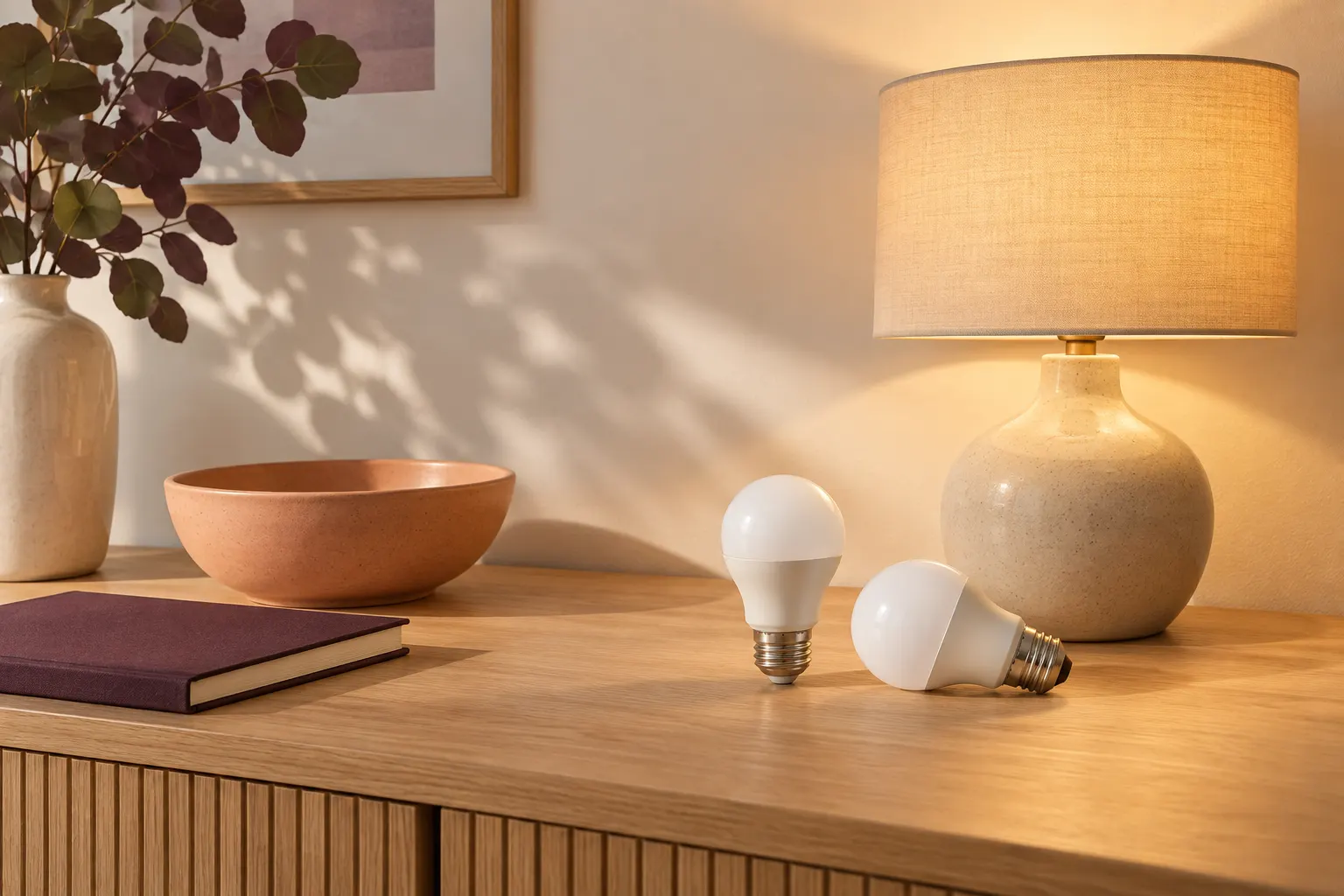
Match the fitting before comparing features
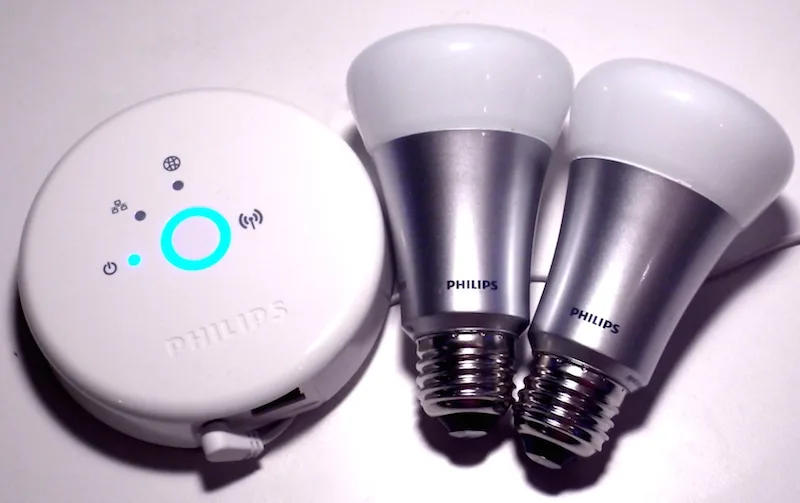
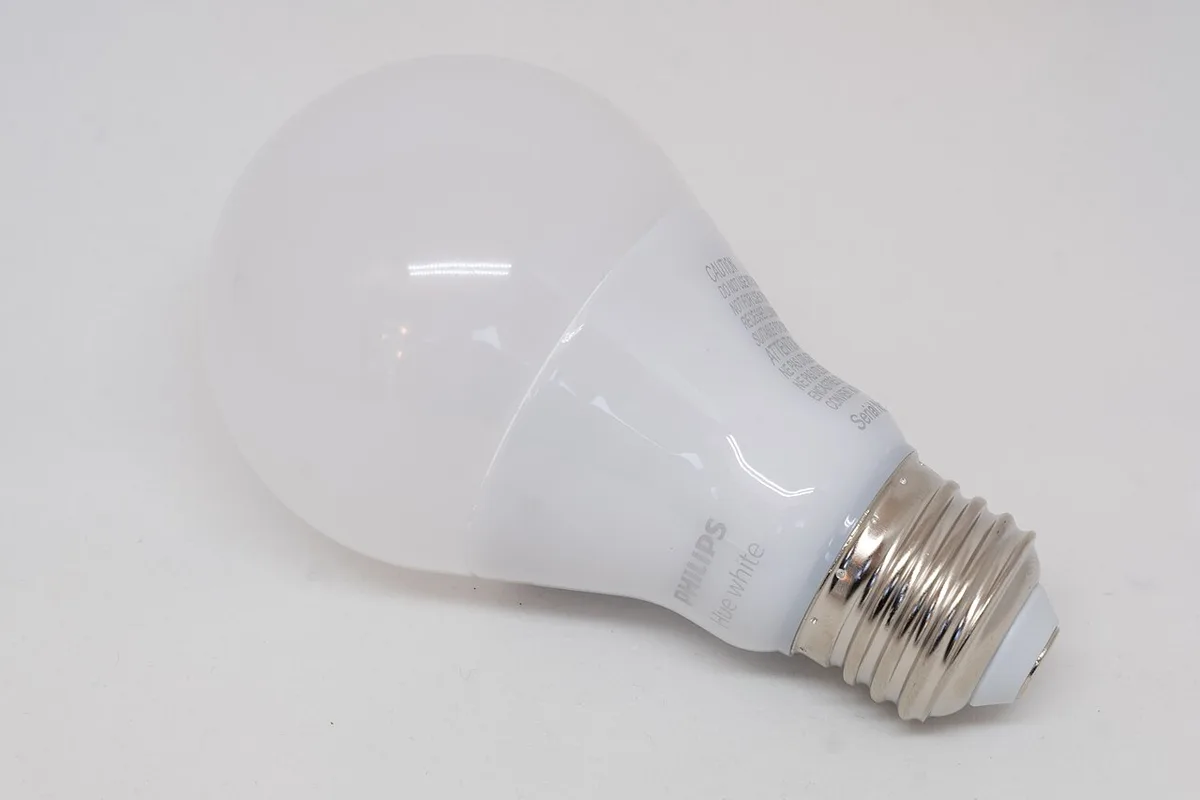
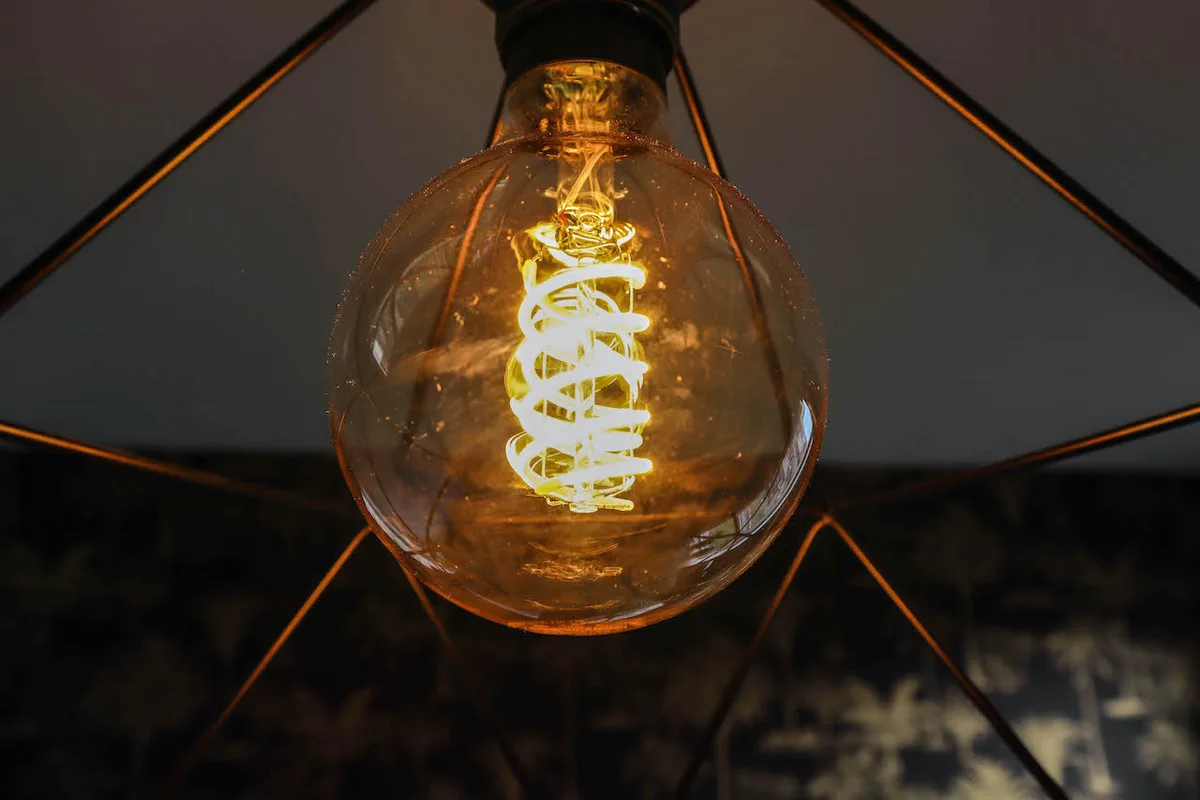
A smart bulb needs the correct base and a suitable physical envelope before its app features matter. Read the fitting specified by the lamp manufacturer and the exact bulb listing; do not infer either from a photograph or the word smart. For a concrete Australian example, Philips Hue lists an E27 base for White A60 model 8720169395268. That is a model-specific starting point, not permission to fit it into every lamp with a similar-looking socket. The archival photograph below shows a screw base clearly, but it is an older bulb and does not establish the current model's specifications.
Hue AU White A60 E27 1100 model 8720169395268 ?
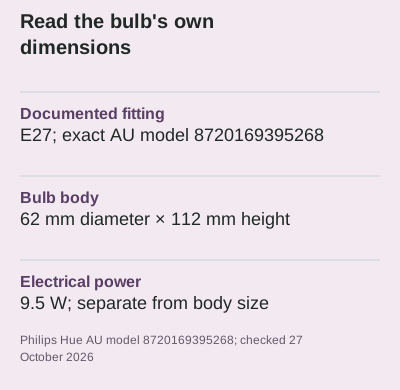
Copy the product dimensions, not the carton
The same Australian product page gives a bulb diameter of 62 mm and a height of 112 mm. Those are the useful dimensions for an initial body-size comparison. The packaging is larger and answers a different question about transport or storage. Write the product dimensions beside the lamp's available space and its actual instructions. A shade opening, neck or enclosed housing may impose additional restrictions. Subtracting two measurements can reveal an obvious clash, but a positive difference does not prove ventilation, electrical suitability or the ability to insert and remove the bulb safely.
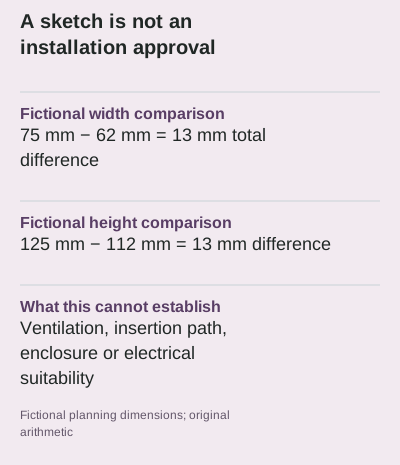
Make a rough comparison without calling it clearance approval
Suppose a planning sketch records an internal width of 75 mm and a height envelope of 125 mm. Against the documented 62 mm by 112 mm bulb, the simple differences are 13 mm across and 13 mm in height. These fictional dimensions illustrate subtraction only. They are not minimum clearances, and the width difference is not space on each side. A neck, angled insertion path or fitting depth can change the result completely. Keep the sketch labelled preliminary until the actual fixture instructions and geometry support the exact bulb choice.
Keep the lamp's operating restrictions in view
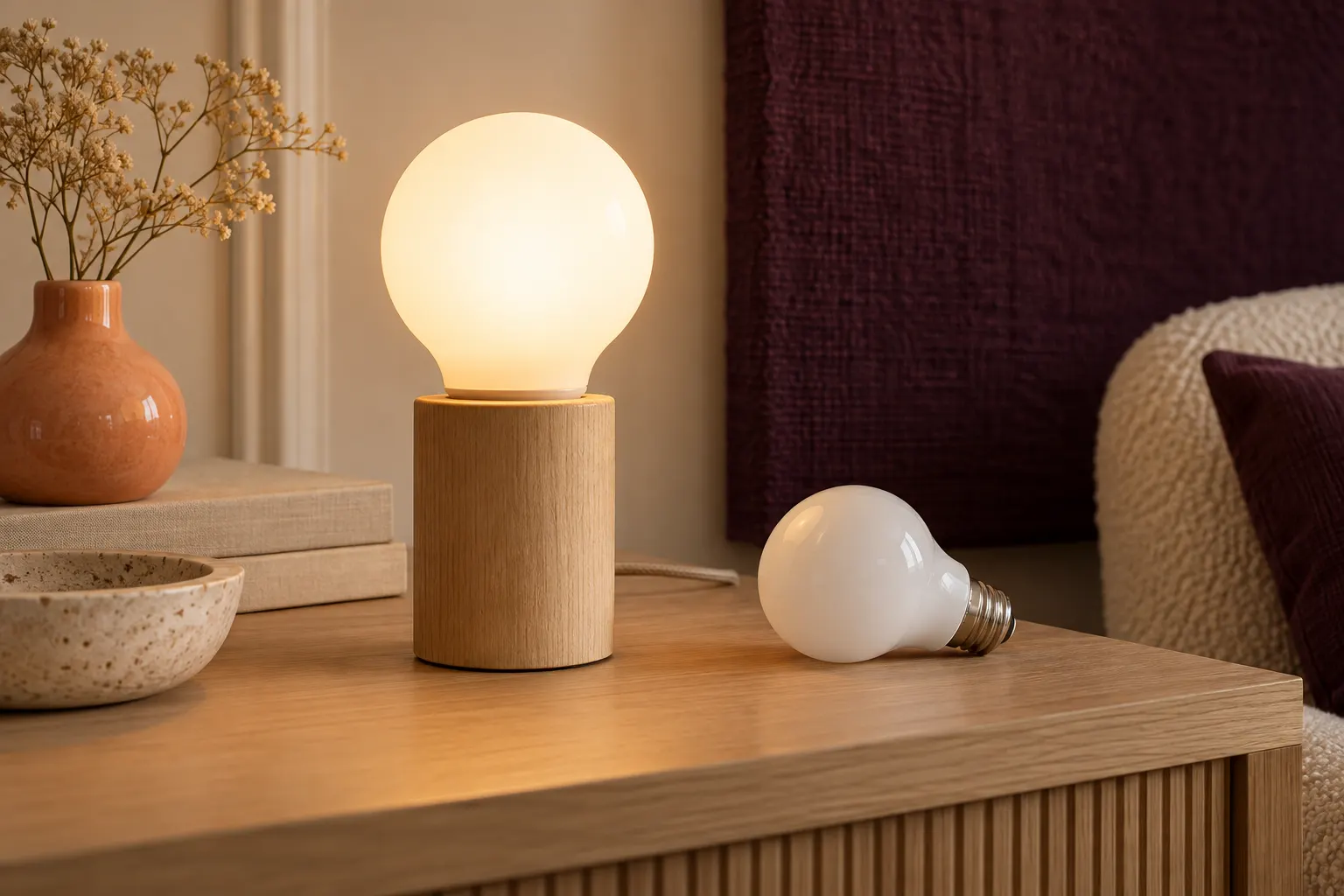
A matching base and plausible body size do not settle the remaining requirements. Read the actual lamp and bulb instructions for supply, enclosure, dimmer and environmental restrictions. The AU example is listed at 9.5 W; that is an electrical-power figure, not its physical size or a universal compatibility allowance. Do not substitute the marketing watt-equivalent of another lamp for the actual wattage. The photographed filament globe demonstrates a different outline inside a shade, rather than proving that the white bulb has the same shape or installation conditions.
Keep one purchase record for the exact bulb
Save the product number, base designation, dimensions, fixture instructions and seller's exact regional listing together. This is especially useful when a listing offers several brightness levels or base variants beneath similar pictures. Separate any hub, app or controller requirements from the lamp-fit decision: a physically suitable bulb can still require a different control setup. The historical bridge-and-bulbs photograph makes that separation visible without recommending those old devices. If the required fitting or instruction cannot be established, leave the candidate unresolved instead of treating a promotional image as confirmation. Recheck the current model documentation before ordering.
Open official model documentation ?