Separate smart-bulb brightness from electrical power
Read lumens, watts and colour temperature separately when comparing an Australian smart-bulb listing.
Updated:
Start with the kind of number you are comparing
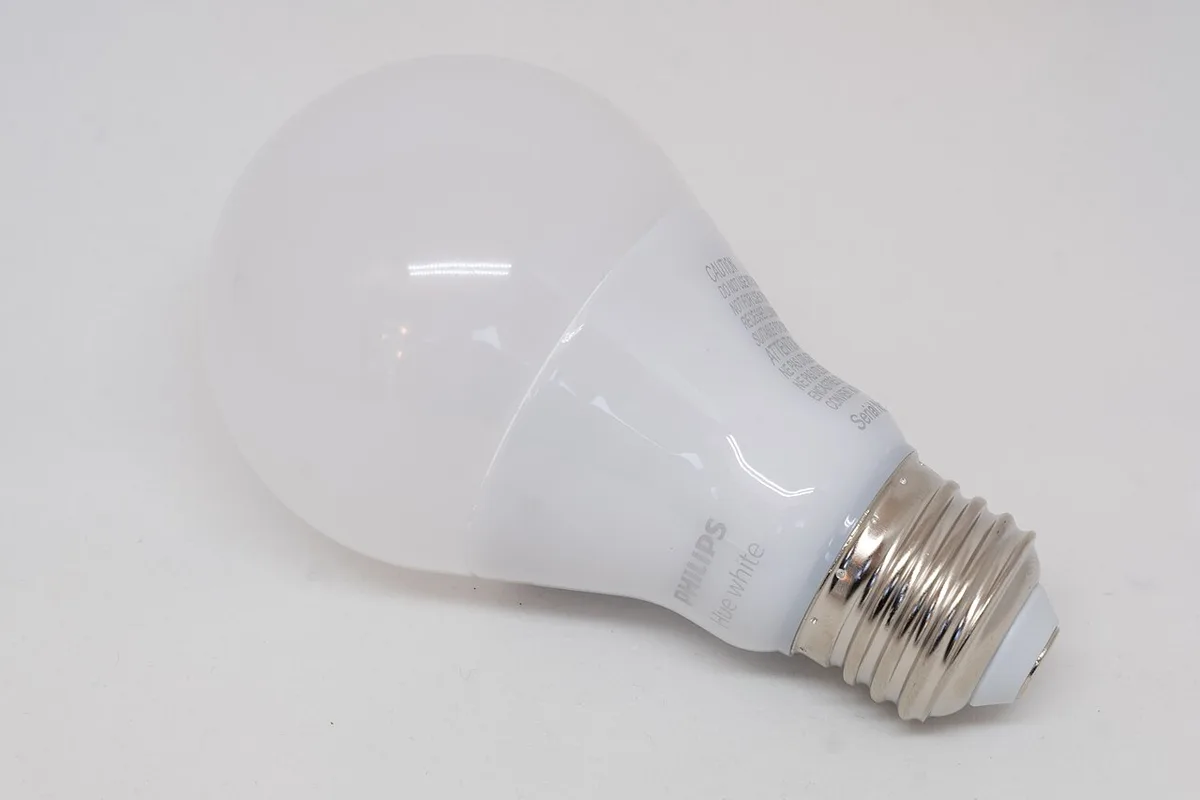
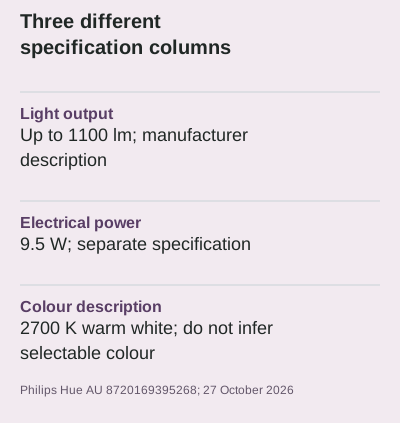
Lumens describe light output, watts describe electrical power and kelvin describes colour temperature. They answer different questions, so a larger number in one column cannot substitute for another. The Australian Philips Hue White A60 E27 model 8720169395268 is described as producing up to 1100 lm, with 9.5 W power and a warm-white 2700 K description. These are manufacturer figures for a specific model, not our measurements. The most useful first step is to copy each value into its own labelled column instead of collecting a single impressive number from a product tile.
Hue AU White A60 E27 1100 model 8720169395268 ?
Keep the model and operating description attached
The product page's overview describes fixed warm-white light. A separate technical field is labelled lumen output at 4000 K, which should not be read as proof that this White model offers selectable colour temperature. Where a page mixes generic table headings with a specific model description, retain the distinction and use the actual model documentation to resolve the question. Do not quietly turn the conflicting heading into an extra feature. Likewise, a photograph of an older white bulb or a filament globe cannot verify the current model's output, power or available settings.
Use an efficiency ratio for one limited comparison
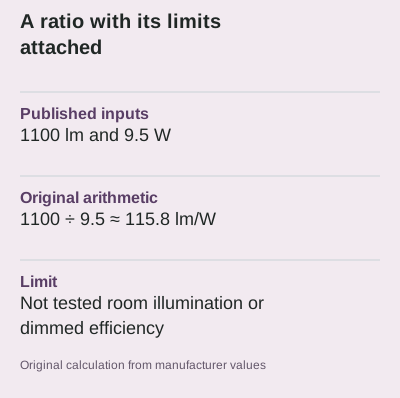
Dividing the stated maximum output by the listed power gives 1100 ÷ 9.5, approximately 115.8 lumens per watt. This is a simple ratio made from the published figures. It is not a tested efficiency rating, a promise about every dimming level or evidence that a room will be adequately lit. The calculation is useful for spotting which quantities have been compared. If another candidate provides values measured under different conditions, the apparent difference needs that qualification. Keep the original values beside the result so the arithmetic remains auditable when a listing changes.
A room receives more than a bare-bulb specification
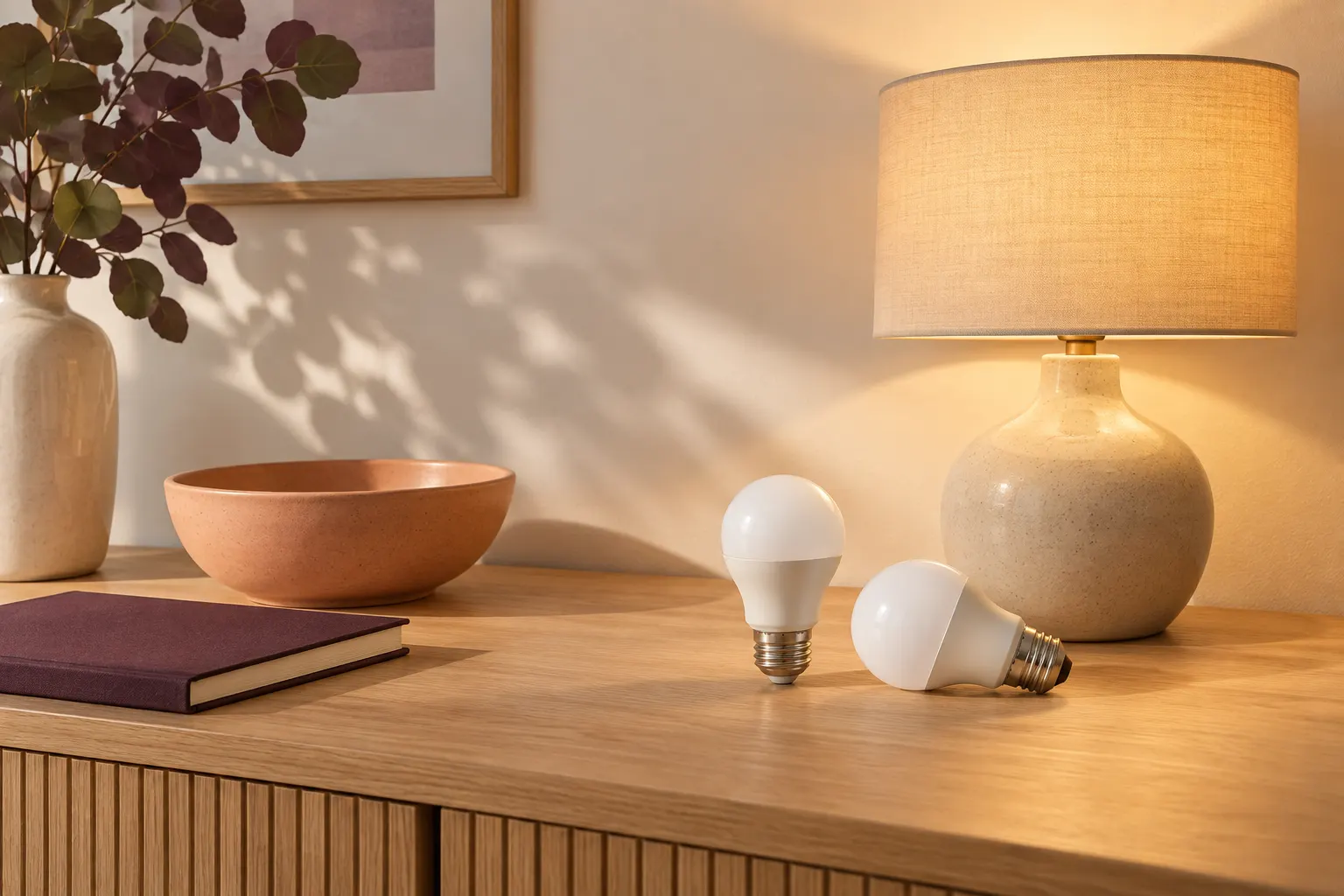
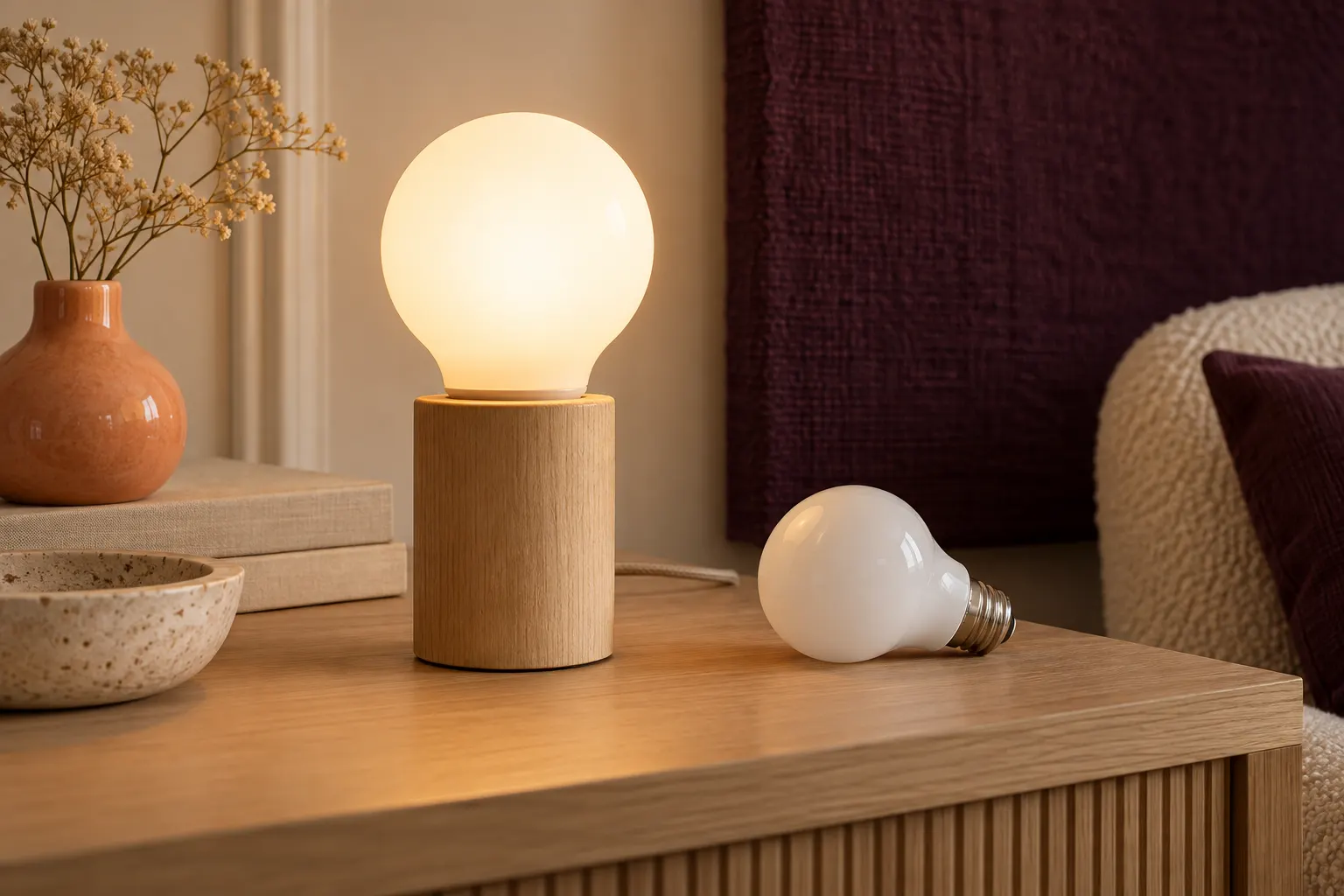
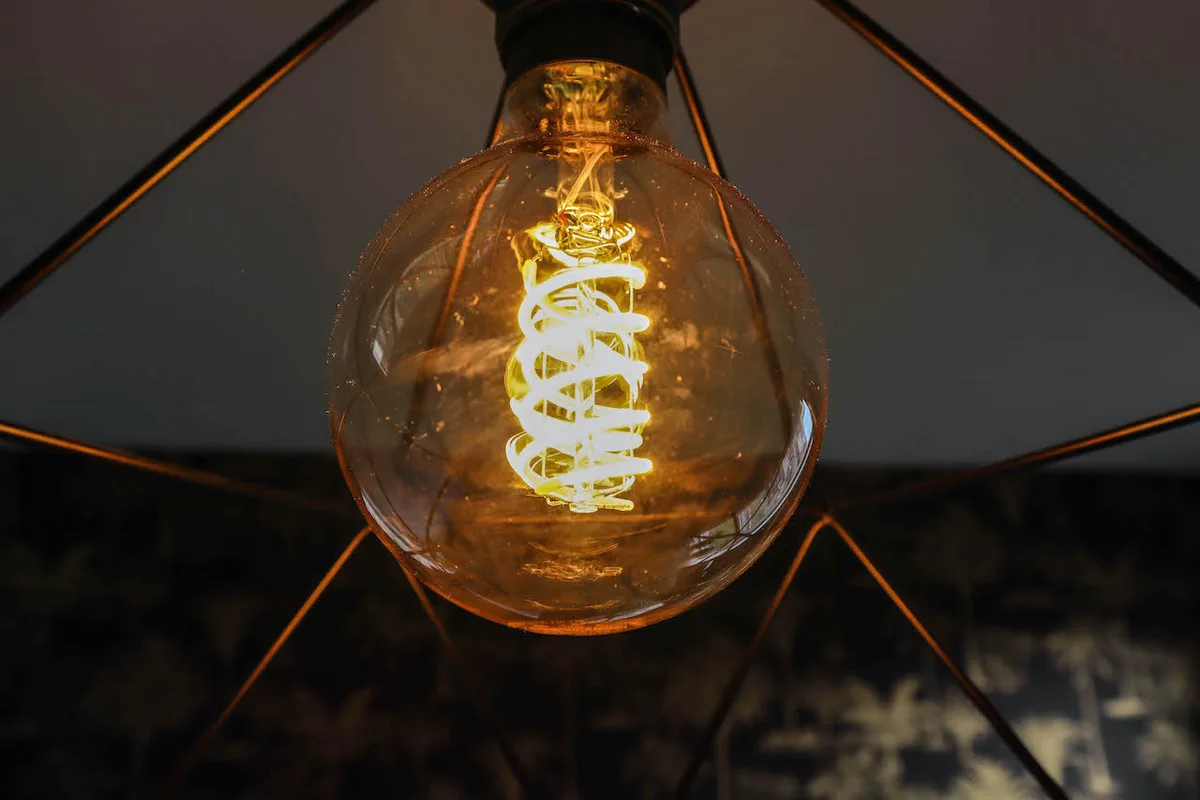
The shade, fixture, placement and surrounding surfaces influence the light that reaches a task. A decorative filament globe can distribute light differently from an opaque bulb even when a listing shows a similar nominal output. The archive photograph makes that physical distinction visible; it does not establish a measured comparison between the pictured products. Also record the actual bulb dimensions when considering an existing lamp. The example model is 62 mm across and 112 mm high. Those size figures are a separate fit check, not a way to calculate task illumination from a photograph.
Build a comparison with explicit unknowns
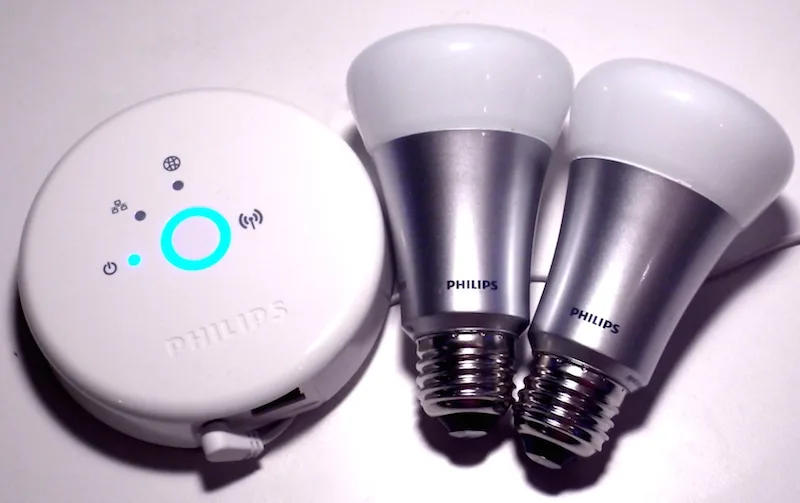
A useful shortlist contains exact model, base, dimensions, stated light output, power, colour description and the conditions attached to each claim. Mark a missing value unknown instead of borrowing it from a nearby variant. Then record the intended lamp and the control arrangement independently. The historic bridge-and-bulbs photograph reminds you that system components are separate purchases and specifications, not evidence of current compatibility. This approach leaves a clear reason for preferring one documented candidate while making unresolved room suitability visible. It does not require an invented brightness score or a claim that we tested the products.
Open official model documentation ?