Measure the sensor body without inventing a magnet gap
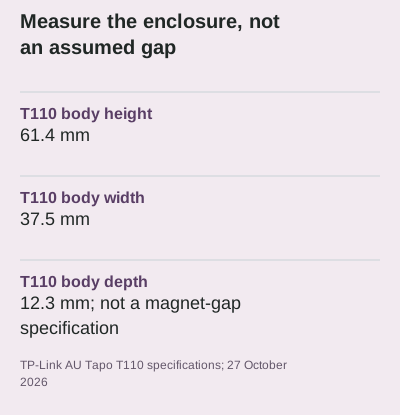
Use the Tapo T110 body dimensions for a space record while keeping magnet alignment and installation requirements separate.
Updated:
The body size does not tell you the allowed gap
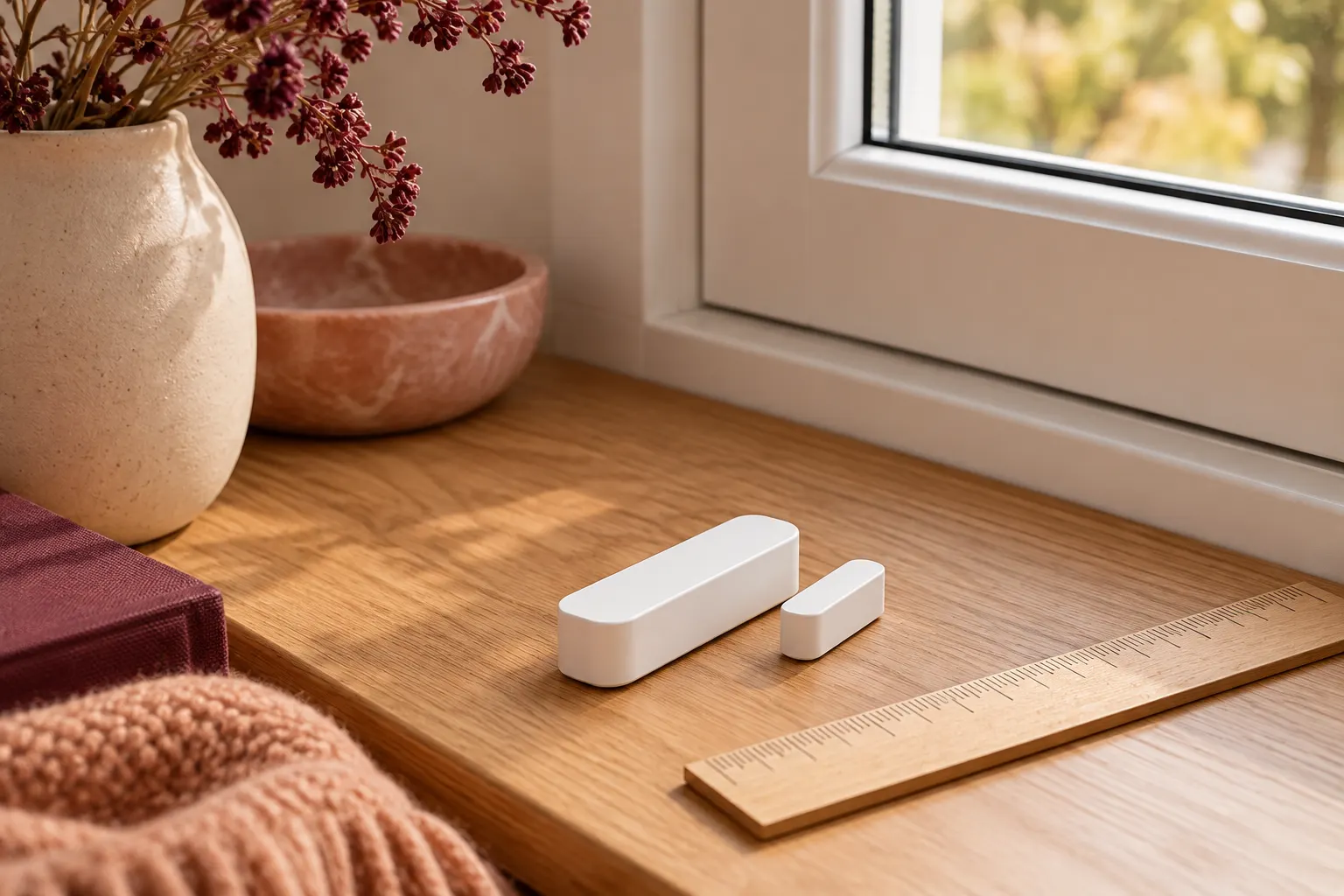
A contact-sensor specification can describe the enclosure without stating the permitted separation between sensor and magnet. Do not confuse those measurements. TP-Link's Australian Tapo T110 page lists a body 61.4 mm high, 37.5 mm wide and 12.3 mm deep. Those numbers support an initial space record, not a magnet-alignment instruction. The door photograph shows a separate body and magnet on a different combined detector. Its visible gap is not a T110 specification, and copying it would replace the actual installation instructions with an unrelated picture.
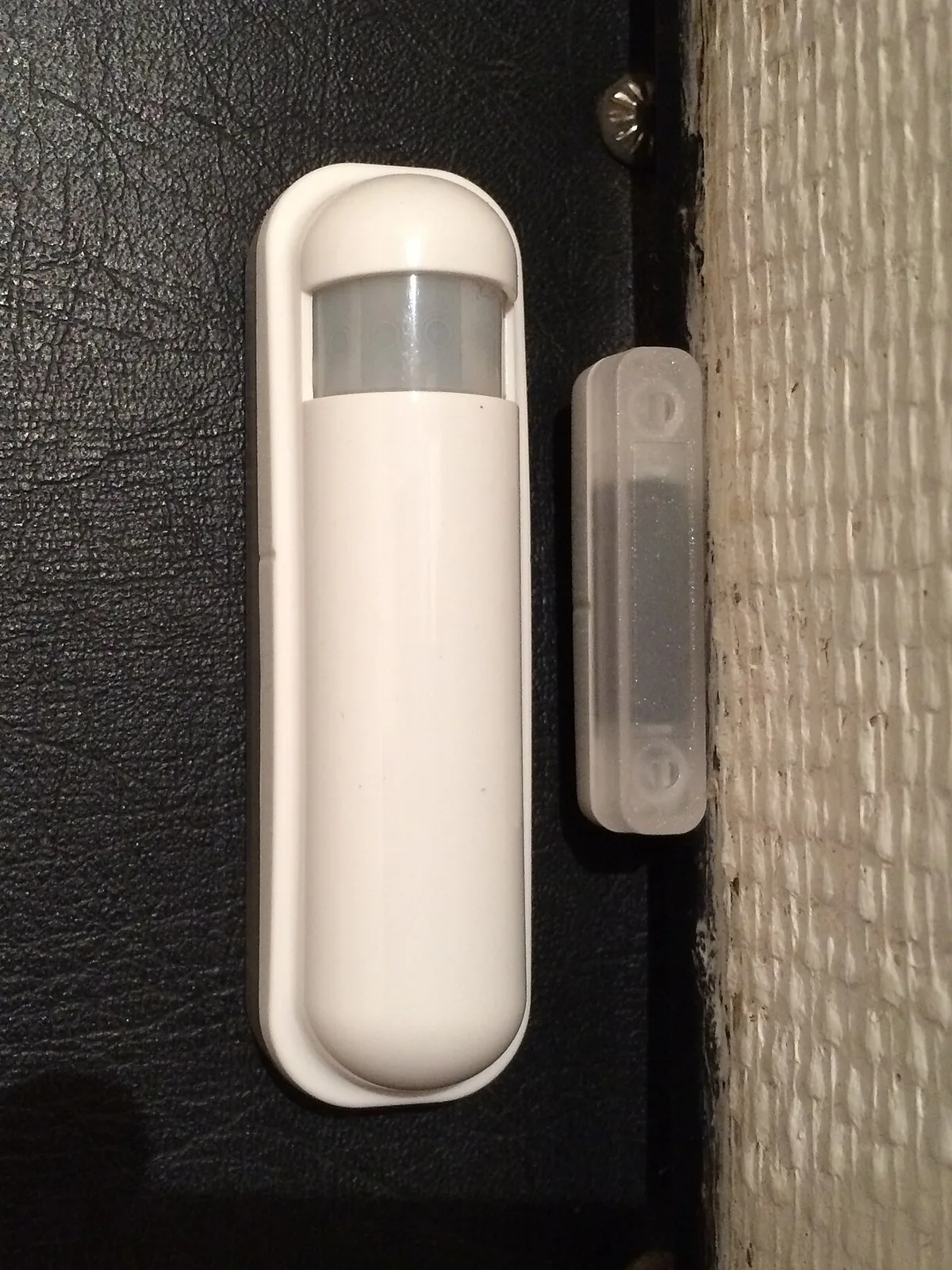
Record each surface that would carry a component
A useful sketch identifies the fixed frame, moving section, raised edges and available mounting surfaces. Put the documented body dimensions on the drawing and leave the magnet dimensions and permitted alignment unresolved until the actual instructions provide them. Do not assume the body can bridge a step or that adhesive will suit every material. This is a purchase-planning exercise, not an installation procedure. If a candidate surface is narrower than the body, that obvious mismatch is worth identifying before ordering; if it is wider, the other requirements still remain.
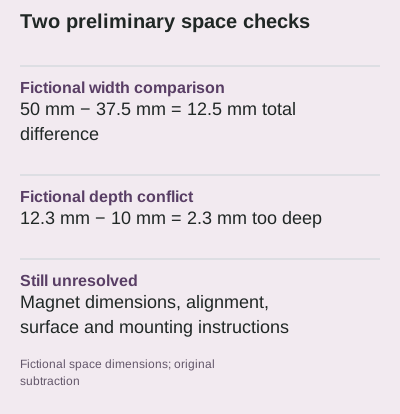
Use subtraction only for the question it answers
Suppose a fictional flat area is 50 mm wide. Subtracting the documented 37.5 mm body width leaves 12.5 mm total difference. That does not mean 12.5 mm on each side, and it says nothing about the magnet gap. If the same sketch has only 10 mm of depth available, the documented 12.3 mm body is 2.3 mm deeper than that assumed space. These examples show how a dimensional record can expose a conflict. The numbers are not approved clearances, adhesive allowances or a recommendation for a particular door.
Keep sensing function separate from appearance
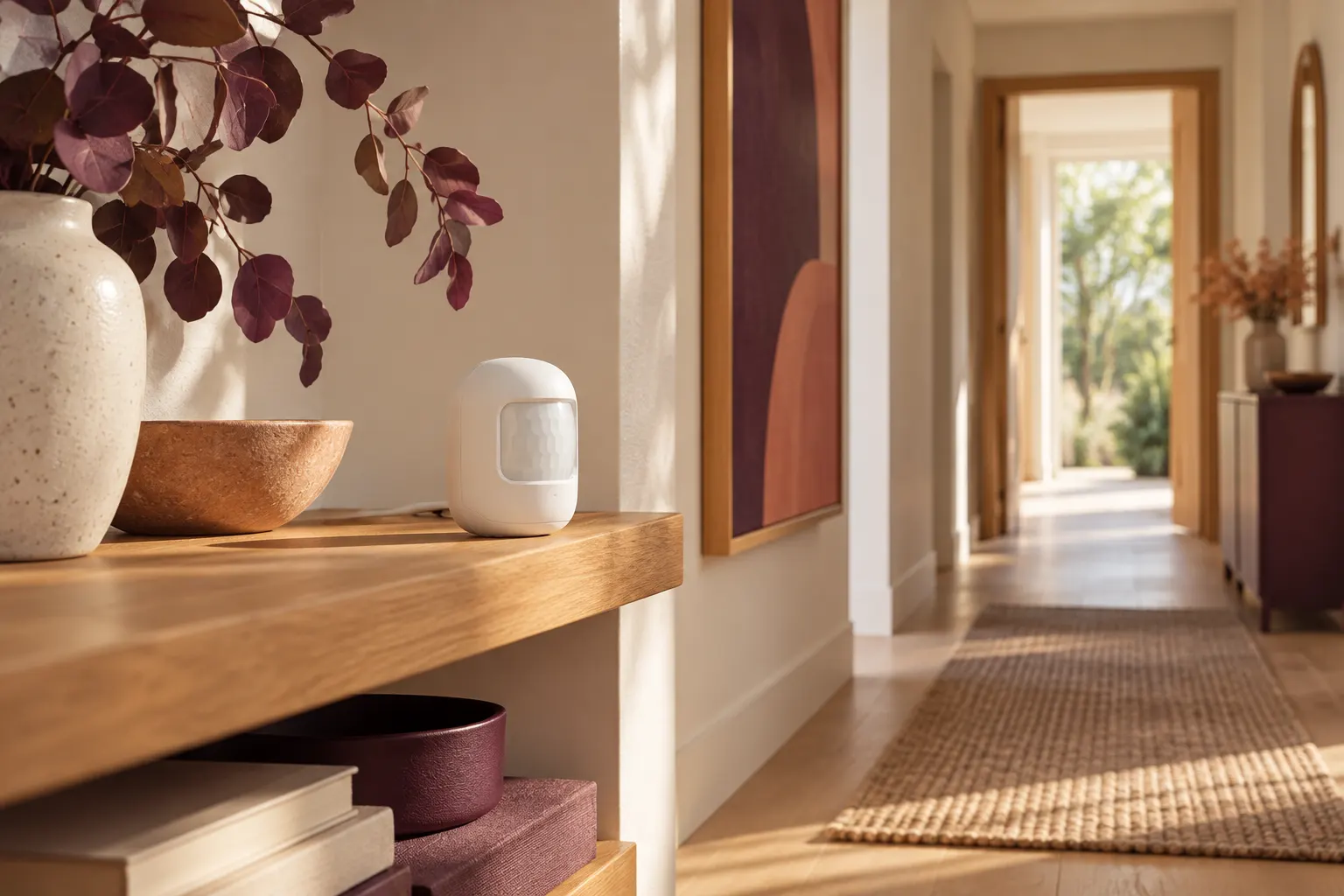
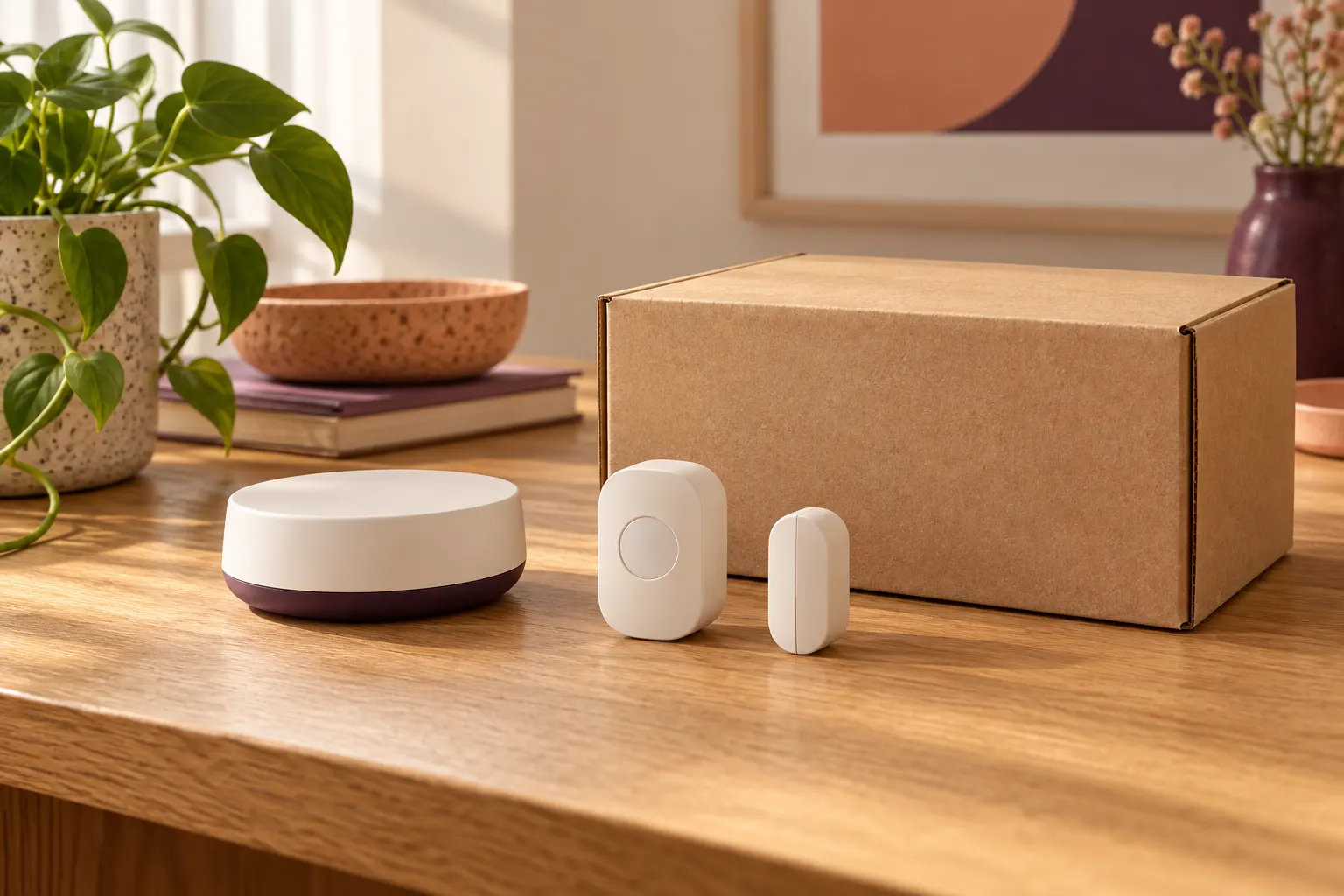
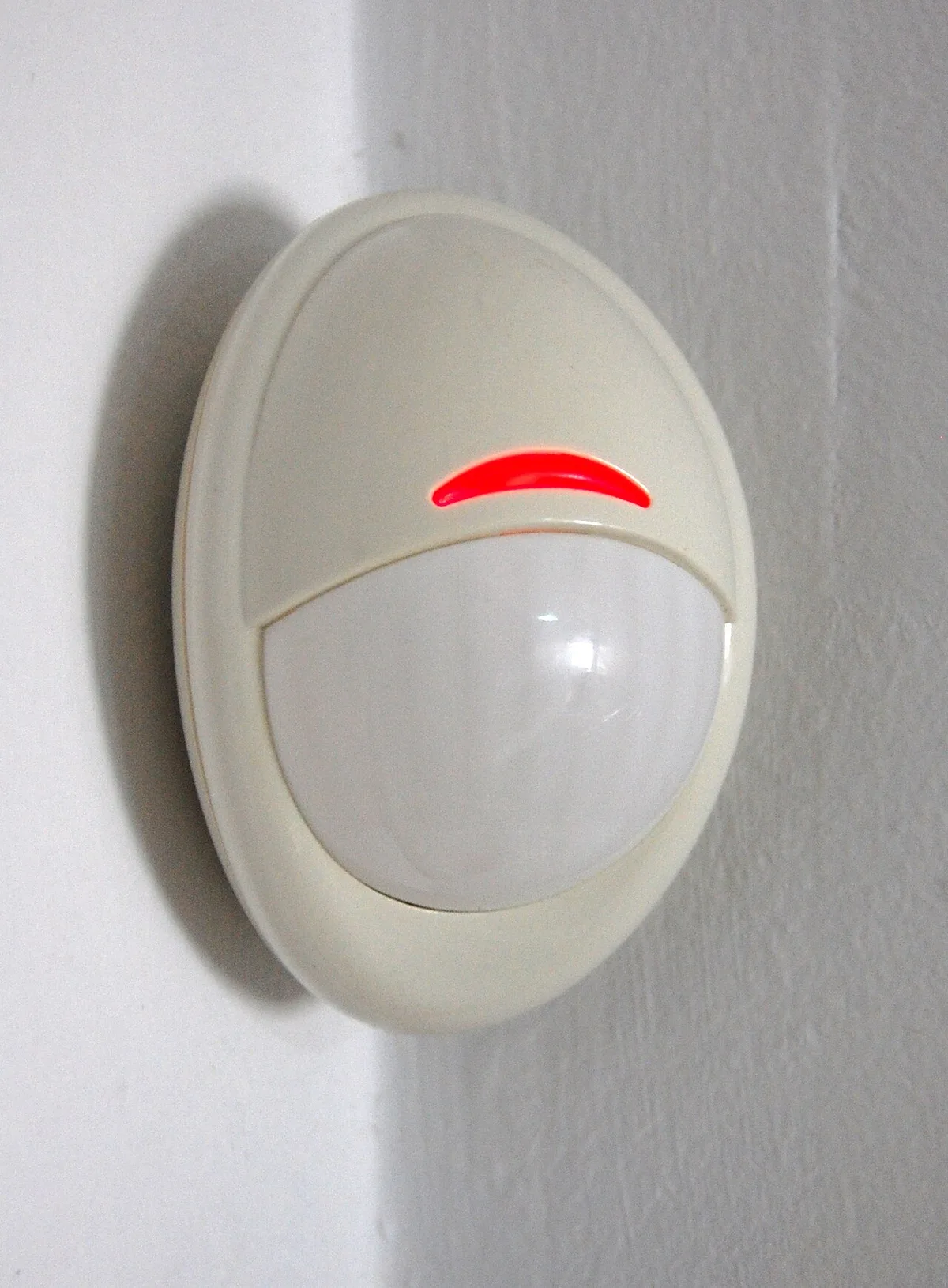
A device described as a sensor may detect opening, motion or another condition. The archived door unit combines opening and motion functions, while the Visonic photograph shows a passive infrared motion detector. Neither is the Tapo T110. These photographs make the physical distinction visible, rather than establishing which automation a different product supports. Write the intended event in ordinary language, such as the opening of a named window, then match that need to the exact product documentation. A familiar white enclosure is not a reliable way to identify the sensing method or required hub.
Include the hub and the regional package in the record
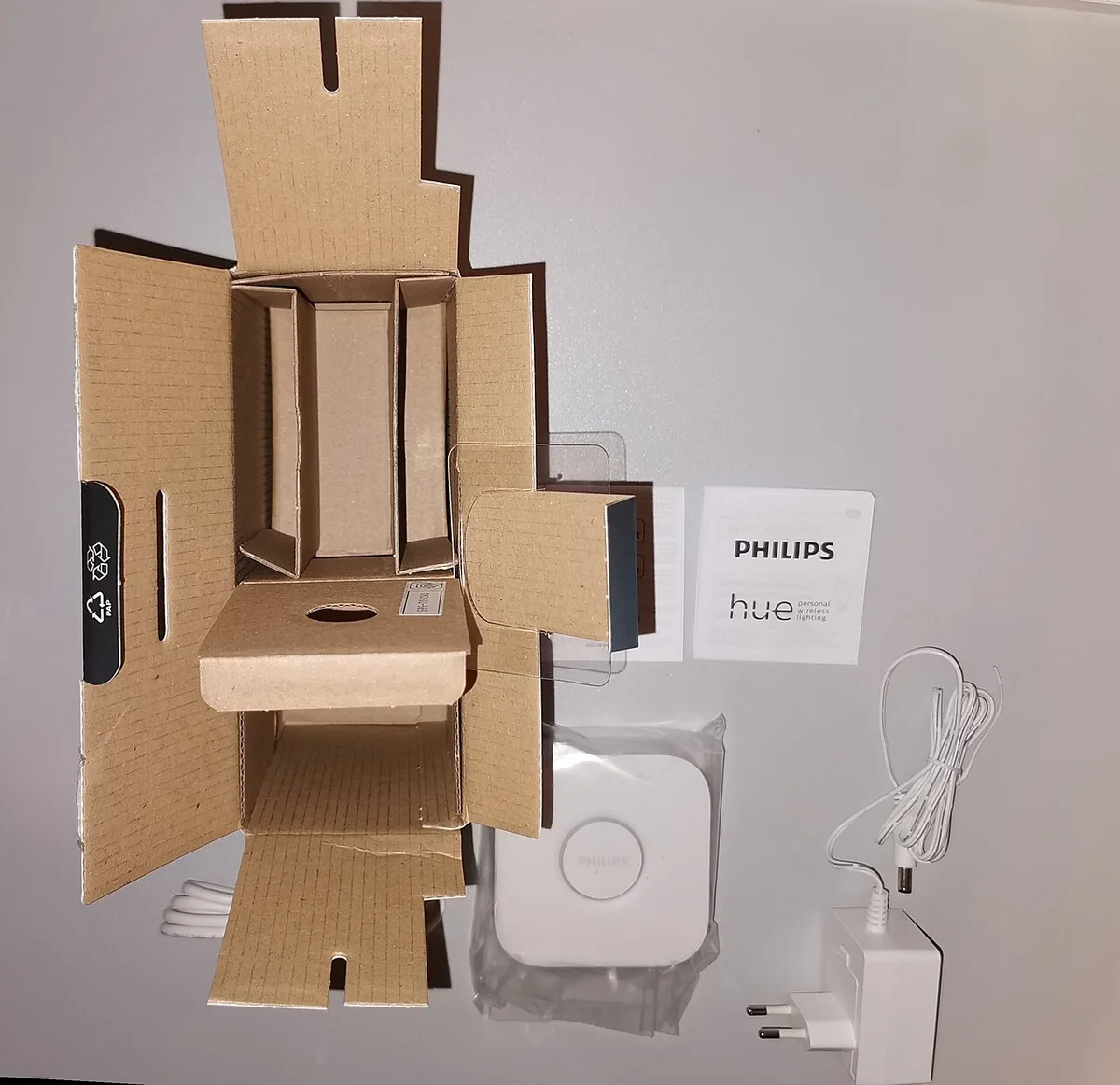
The Australian T110 page states that a hub is required. A body that fits the frame can therefore still be an incomplete purchase. Keep the compatible hub, regional model, instructions and included mounting items beside the dimensional sketch. The unpacking photograph is only an archive example of separate hardware and documentation; its European adapter is not an Australian package recommendation. Do not infer notification reliability or home-security performance from a successful space calculation. The finished record should distinguish a confirmed physical mismatch, a documented requirement and an unanswered installation question so each can be resolved on its own evidence.
Open official model documentation ?